


Interpersonal skills play a crucial role in how people communicate, collaborate, and build relationships in both personal and professional life. These skills influence teamwork, leadership, conflict resolution, and workplace productivity. In modern workplaces, employers increasingly value strong communication and collaboration abilities alongside technical knowledge.
Some examples of interpersonal skills are communication, empathy, active listening, teamwork, leadership, negotiation, and emotional intelligence. These skills are what help people collaborate with coworkers, clients, and teams. They also help build relationships based on trust and cooperation. It has been found that with strong interpersonal skills, collaboration, productivity, and success of an organization greatly improve.
In fact, research has found that ineffective collaboration and communication are major reasons for failures of organizations, on the other hand, the research has also found that good communication increases productivity by 25%. Knowledge of interpersonal skills examples equips an individual with the requisite tools to foster healthy relationships and also perform better.
Table of Contents
Key Interpersonal Skills Examples That Drive Workplace Success
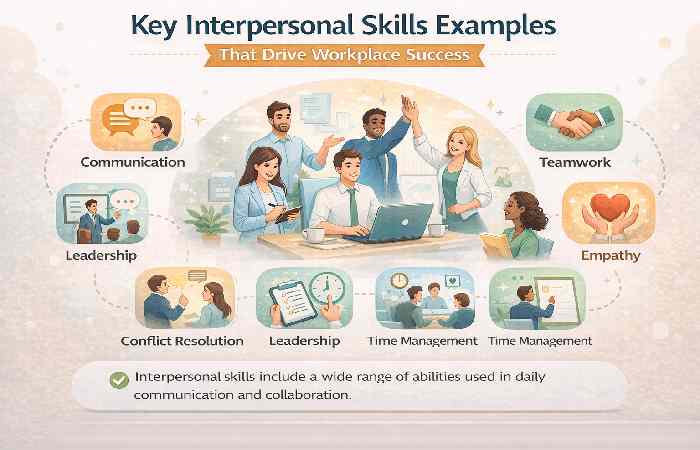
Interpersonal skills include a wide range of abilities used in daily communication and collaboration.
Core Interpersonal Skills Examples
| Skill | Description | Workplace Example |
| Communication | Sharing ideas clearly through speaking or writing | Explaining a project plan to teammates |
| Active Listening | Paying attention and understanding others | Listening carefully during meetings |
| Empathy | Understanding others’ feelings and perspectives | Supporting a stressed colleague |
| Teamwork | Working effectively with others toward goals | Collaborating on team projects |
| Conflict Resolution | Managing disagreements constructively | Mediating workplace disputes |
| Leadership | Guiding and motivating team members | Leading a group project |
| Negotiation | Reaching mutually beneficial agreements | Discussing salary or project timelines |
| Adaptability | Adjusting to changing situations | Handling new workplace policies |
These interpersonal skills examples are essential in nearly every profession because they enable people to interact effectively with others.
What Are Interpersonal Skills?
Interpersonal skills are the abilities that an individual uses to communicate and relate with others. They are also referred to people skills or soft skills, and comprise of both verbal and non-verbal communication.
These are some of the things that interpersonal skills can help an individual achieve:
- Communicate ideas effectively
- Build strong professional relationships
- Collaborate with teams
- Resolve conflicts
- Influence and motivate others
The absence of strong interpersonal skills can also lead to talented professionals failing to thrive in teams.
Why Interpersonal Skills Matter in Modern Workplaces
Modern workplaces rely heavily on collaboration and communication. Strong interpersonal skills examples help organizations operate smoothly and improve team performance.
Benefits of Strong Interpersonal Skills
| Benefit | Explanation |
| Better teamwork | Teams collaborate more efficiently |
| Improved communication | Clear information sharing |
| Strong relationships | Increased trust between colleagues |
| Higher productivity | Fewer misunderstandings |
| Effective leadership | Leaders inspire and guide teams |
Organizations today prioritize employees with strong interpersonal capabilities because they can work well in diverse teams and adapt to different personalities.
Research on team performance shows that individuals with strong social and collaboration abilities significantly improve overall team success.
Types of Interpersonal Skills Examples
There are many examples of interpersonal skills in professional and personal interactions.
Major Categories of Interpersonal Skills
| Category | Key Skills |
| Communication | Verbal communication, non-verbal communication |
| Relationship Building | Trust, empathy, respect |
| Leadership Skills | Motivation, delegation |
| Collaboration Skills | Teamwork, coordination |
| Problem-Solving | Conflict resolution, negotiation |
These categories cover most of the interpersonal skills examples that professionals need to develop for career growth.
The Interpersonal Communication Process
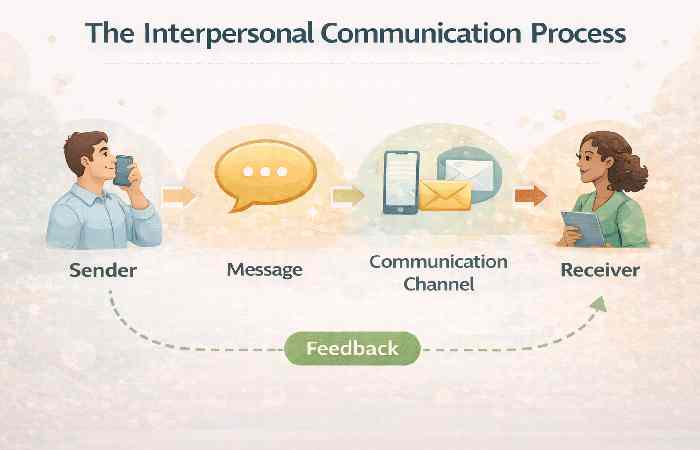
Interpersonal communication involves multiple components:
- Sender – person sharing information
- Message – the information being communicated
- Channel – medium used (speech, text, body language)
- Receiver – person interpreting the message
- Feedback – response confirming understanding
Understanding this process helps individuals apply interpersonal skills examples effectively in real communication situations.
Most Important Interpersonal Skills Examples for Career Growth
Below are some of the most important interpersonal skills for professionals to develop.
1. Communication Skills
Communication is the foundation of interpersonal interaction.
It includes:
- speaking clearly
- writing effectively
- explaining ideas
- asking questions
- giving feedback
Types of Communication Skills
| Type | Description |
| Verbal communication | Speaking clearly and confidently |
| Non-verbal communication | Body language, gestures |
| Written communication | Emails, reports |
| Visual communication | Charts, presentations |
Strong communication allows individuals to avoid misunderstandings and collaborate effectively.
2. Active Listening
Active listening means paying full attention to the speaker and understanding their message.
Key behaviors include:
- maintaining eye contact
- asking follow-up questions
- avoiding interruptions
- summarizing what was heard
Active listening is one of the most practical interpersonal skills examples used daily in meetings, negotiations, and conversations.
3. Empathy
Empathy refers to understanding and sharing the feelings of others.
Professionals with empathy can:
- build trust
- support team members
- manage conflicts effectively
- strengthen workplace relationships
Empathy in Workplace Situations
| Situation | Empathetic Response |
| Employee stress | Offer support and flexibility |
| Team conflict | Understand both perspectives |
| Customer complaint | Listen and acknowledge concerns |
4. Teamwork and Collaboration
Modern workplaces rely heavily on teamwork.
Employees must collaborate with people from different backgrounds, departments, and expertise levels.
Examples of teamwork skills include:
- sharing responsibilities
- supporting colleagues
- contributing ideas
- respecting diverse opinions
Strong teamwork is one of the most valuable interpersonal skills examples employers look for.
5. Conflict Resolution
Conflict is common in workplaces, but interpersonal skills help resolve it constructively.
Effective conflict resolution includes:
- listening to both sides
- identifying common goals
- negotiating solutions
- maintaining professionalism
Impact of Interpersonal Skills on Workplace Performance
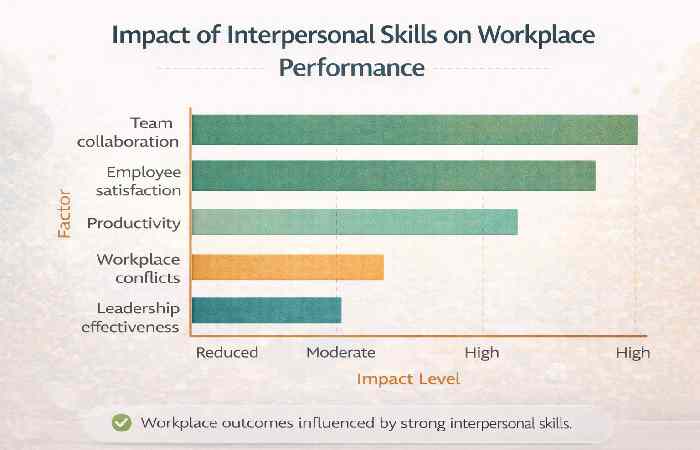
Suggested graph values:
| Factor | Impact Level |
| Team collaboration | High |
| Employee satisfaction | High |
| Productivity | Moderate to High |
| Workplace conflicts | Reduced |
| Leadership effectiveness | High |
Caption: “Workplace outcomes influenced by strong interpersonal skills.”
How to Develop Strong Interpersonal Skills
Improving interpersonal abilities requires practice and self-awareness.
- Practical Ways to Improve
- Practice active listening
- Improve emotional intelligence
- Ask for feedback
- Observe effective communicators
- Participate in teamwork activities
Skills Development Methods
| Method | Benefit |
| Training programs | Learn structured communication techniques |
| Mentorship | Gain practical advice |
| Self-reflection | Identify improvement areas |
| Networking | Practice communication with new people |
Studies suggest emotional intelligence training can improve collaboration, trust, and leadership effectiveness within teams.
Real-World Interpersonal Skills Examples
Here are practical scenarios demonstrating interpersonal skills examples.
Workplace Scenario Examples
- A manager listening to employee concerns during a meeting
- A team collaborating to finish a project deadline
- A customer service agent calmly resolving a complaint
- A leader motivating team members during challenging projects
These examples show how interpersonal abilities improve professional outcomes.
Interpersonal Skills Examples for Students
Students develop interpersonal abilities through classroom activities, teamwork, and communication with teachers and peers. Strong interpersonal skills help students collaborate effectively, solve problems, and build confidence.
Interpersonal Skills Examples for Students
| Skill | Example |
| Communication | Presenting a class project |
| Teamwork | Working on group assignments |
| Active listening | Following teacher instructions |
| Leadership | Leading a school activity |
| Empathy | Helping classmates |
Tip: Students can improve these skills through group discussions, debate clubs, and team sports.
Interpersonal Skills Examples for Interview
Employers often evaluate interpersonal abilities during interviews because these skills affect teamwork, communication, and leadership.
Interpersonal Skills Examples for Interview
| Skill | Interview Example |
| Communication | Clear answers to questions |
| Active listening | Understanding interviewer questions |
| Confidence | Maintaining eye contact |
| Problem-solving | Explaining how conflicts were resolved |
| Teamwork | Sharing team project experiences |
Tip: When answering interview questions, give real examples from previous experiences to demonstrate strong interpersonal abilities.
Interpersonal Skills Examples in Different Careers
Different industries emphasize different interpersonal abilities.
Skills by Profession
| Profession | Important Interpersonal Skills |
| Teacher | Communication, patience |
| Manager | Leadership, conflict resolution |
| Sales professional | Persuasion, negotiation |
| Healthcare worker | Empathy, listening |
| Software developer | Collaboration, problem-solving |
Even technical roles require interpersonal competence because most projects involve teamwork and collaboration.
Future Importance of Interpersonal Skills
As technology continues to advance and remote work becomes more commonplace, skills related to human interaction become even more important.
Companies are placing more and more value on employees who are able to:
- Work with teams from different parts of the globe.
- Communicate online concisely, and to the point. ·
- Facilitate conflict.
- Create and maintain solid working relationships.
Strong interpersonal skills will be in even greater demand in the future particularly in the areas of leadership, management, customer service, and work that requires collaboration.
Conclusion
Interpersonal skills are foundational to communication, collaboration, leadership, and relationships. People who develop strong interpersonal skills tend to do well in the workplace, expand their professional circle and network, and collaborate well with others. Interpersonal skills include: communication, empathy, collaboration, active listening, leadership, and conflict management.
Improving these skills will increase productivity, positive relationships, and a healthy work environment. Strong interpersonal skills and practical learning from interactions will help a person to succeed in their career and build relationships.
Yasmeen is a business and digital content writer at InBusinessWorld with more than five years of experience creating informative, practical and reader-focused content. She covers business, finance, marketing, technology and digital trends, helping readers understand important developments, strategies and ideas across the modern business landscape.
View Syeda Yasmeen Profile →
Sameena is a content reviewer and editorial specialist at InBusinessWorld with more than five years of experience reviewing digital content. She reviews business, finance, marketing, technology and related editorial content with a focus on clarity, accuracy, readability, logical structure and overall content quality.
View Sameena Begum Profile →